How Could 2-on-2 Fights Be Televised?
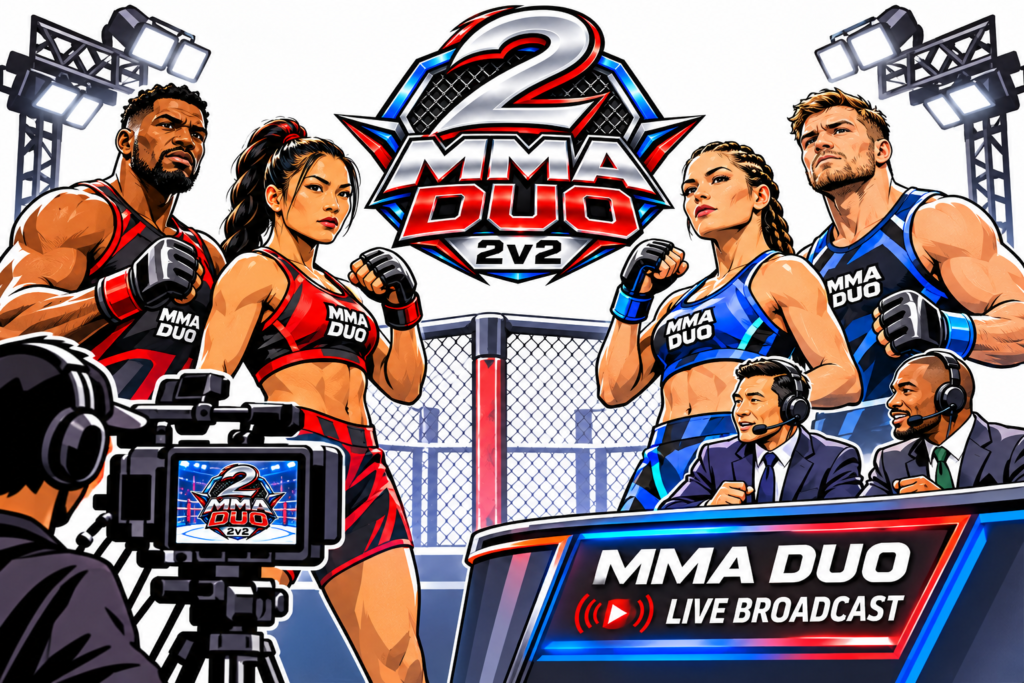
MMA Duo could create a new broadcasting opportunity for combat sports by bringing two-person teams into a live competition format. Instead of following just one fighter, viewers would watch two teammates competing together against another pair, creating additional action, team strategy, and unpredictable moments.
But how could a 2-on-2 MMA event be televised? What camera angles would broadcasters need? Could traditional sports television handle the action, or would MMA Duo benefit from its own streaming platform?
These are important questions for the future growth of MMA Duo. With the right production approach, broadcasting could help introduce team-based mixed martial arts to a much larger audience.
1. Why MMA Duo Broadcasting Would Be Different
Traditional MMA broadcasts generally focus on two individual fighters competing against each other. A 2-on-2 format introduces another layer because broadcasters must follow two teammates on each side.
This creates several opportunities for television producers:
– **More action:** Two fighters on each team create additional movement and potential exchanges.
– **Team strategy:** Viewers can watch teammates coordinate their attacks and defensive decisions.
– **Multiple storylines:** Each team can develop its own identity, strengths, and competitive approach.
– **More camera coverage:** Producers can switch between individual fighters and the overall team battle.
– **New commentary opportunities:** Announcers can explain teamwork, positioning, communication, and tactical decisions.
The challenge would be making the action easy to follow without overwhelming viewers.
2. What Camera Angles Would an MMA Duo Broadcast Need?
Camera placement would be one of the most important parts of producing a successful MMA Duo television event.
A traditional single-fight broadcast may not provide enough coverage for two-person teams competing simultaneously.
A professional production could use several camera positions:
– **Main wide-angle camera:** Shows the entire competition area so viewers can follow both teams.
– **Corner cameras:** Capture individual fighters and their movements.
– **Elevated cameras:** Provide an overhead view of positioning and team coordination.
– **Close-up cameras:** Show important exchanges, defensive movements, and referee decisions.
– **Replay cameras:** Allow viewers to review important moments from different angles.
The main broadcast should provide a clear view of the overall competition while additional cameras capture important details.
3. How Would Live Commentary Work?
Commentary would need to explain more than individual fighting techniques. Announcers would also need to understand how two teammates work together.
A potential MMA Duo broadcast team could include:
– **Play-by-play announcer:** Describes the action as it happens.
– **MMA analyst:** Explains techniques, positioning, and fighting strategies.
– **Team strategy analyst:** Focuses on communication and cooperation between teammates.
– **Rules specialist:** Explains referee decisions, penalties, and scoring.
Commentators could also explain when a team changes its approach, when one fighter creates an opening for a teammate, or when a team begins focusing on defense.
This additional analysis could help new viewers understand what makes MMA Duo different.
4. Could MMA Duo Be Broadcast on Streaming Platforms?
Online streaming could be an important starting point for MMA Duo.
Launching a new combat sports format on traditional television could involve significant production expenses and broadcasting agreements. Streaming offers another way to reach audiences without immediately requiring a major television contract.
Potential distribution options include:
– **YouTube:** Free promotional events, highlights, interviews, and selected live broadcasts.
– **Subscription streaming:** Full events available through a monthly or annual membership.
– **Pay-per-view:** Viewers purchase access to individual tournaments or special events.
– **Sports streaming services:** MMA Duo events could potentially be offered through established sports platforms.
– **Official MMA Duo website:** A central location for event information, schedules, videos, and streaming links.
A combination of free content and paid events could help build an audience while creating opportunities for revenue.
5. How Could Television Graphics Help Viewers Follow the Fight?
Broadcast graphics would be especially important because viewers need to identify four competitors and understand what is happening throughout the contest.
MMA Duo could introduce graphics designed specifically for two-person team competition.
Examples include:
– Team names and colors displayed throughout the broadcast.
– Individual fighter names and identification.
– Round timers and official score information.
– Team scoring graphics, where applicable under the competition rules.
– Penalty and referee decision notifications.
– Instant replay labels showing important exchanges.
Consistent red and blue team colors could help viewers quickly recognize which fighters belong together.
Graphics should remain simple and readable, particularly during fast-moving exchanges.
6. Could MMA Duo Events Be Broadcast Internationally?
International broadcasting could eventually help MMA Duo reach audiences beyond its original event locations.
Combat sports already attract viewers across different countries, and a team-based format could appeal to people interested in martial arts, athletic competition, and team strategy.
Possible international broadcasting opportunities include:
– English-language commentary for international audiences.
– Additional language commentary and subtitles.
– Regional streaming partnerships.
– International tournament coverage.
– Social media highlights distributed to different markets.
The ability to deliver broadcasts online could make it easier to introduce MMA Duo to audiences in multiple countries.
7. What Would an MMA Duo Broadcasting Production Need?
A professional broadcast would require equipment, trained personnel, and coordination between the event organizers and production crew.
A basic production setup could include:
– Multiple high-definition cameras.
– Camera operators and technical directors.
– Video switching and replay equipment.
– Audio equipment for commentators and event announcements.
– Lighting suitable for television production.
– A graphics and scoring system.
– Reliable internet connectivity or broadcast transmission equipment.
– Video editors and social media production staff.
Smaller events could begin with a more affordable production setup and gradually expand as audience interest grows.
8. Could Broadcasting Help MMA Duo Attract Sponsors?
Broadcasting could create valuable advertising opportunities for companies interested in reaching combat sports audiences.
Potential sponsorship placements could include:
– Event introductions and opening segments.
– Team uniforms and equipment.
– Broadcast graphics and score displays.
– Interview segments.
– Event replay presentations.
– Commercial breaks during appropriate intervals.
– Sponsored highlight videos.
Sponsors could also support individual teams, tournaments, or entire event series.
However, advertising would need to be organized carefully so that commercial messages do not interfere with the competition or distract viewers.
9. What Challenges Would MMA Duo Broadcasting Face?
Broadcasting a new combat sports format would not be without challenges.
Some important issues would need to be addressed:
– **Camera coverage:** Producers must capture both teammates without missing important action.
– **Viewer understanding:** New audiences need clear explanations of the competition rules.
– **Production costs:** Multiple cameras, staff, and technical equipment can increase expenses.
– **Broadcast rights:** Event organizers would need agreements covering distribution and media rights.
– **Audience development:** A new format must demonstrate that viewers are interested in watching it.
– **Safety coverage:** Referee decisions and medical stoppages must be communicated clearly.
Solving these challenges would be important before attempting large-scale television distribution.
10. Could MMA Duo Become a Televised Combat Sport?
MMA Duo has the potential to offer broadcasters something different from traditional individual MMA competitions.
Two-person teams create additional tactical possibilities, more participants, and opportunities for commentators to explain teamwork alongside individual fighting ability.
A practical approach could begin with professionally recorded events, online distribution, and short highlight videos. As the audience develops, organizers could explore subscription streaming, pay-per-view events, and partnerships with established sports broadcasters.
Ultimately, the success of MMA Duo broadcasting would depend on producing exciting competitions while making the action easy for viewers to understand.
**The opportunity is to turn two-person team fighting into a recognizable and entertaining broadcast experience.**
Related MMA Duo Articles
Continue exploring the format and how its competitions could work:
– What Is MMA Duo? Understanding 2-on-2 Mixed Martial Arts
– How Does a 2 v 2 MMA Fight Work?
– What Are the Rules of MMA Duo?
– How Is an MMA Duo Fight Scored?
– MMA Duo 2-v-2 Tournaments: How Do Two-Person Teams Compete?